
Is Talmont-sur-Gironde worth visiting?
Talmont-sur-Gironde does not try to impress visitors with dozens of commercial museums or noisy amusement parks. There is no single attraction where you take one quick photo and return to the car ten minutes later. The real appeal lies in the whole landscape: the scent of salt in the air, the sound of waves breaking against the rocks, blooming hollyhocks and the village’s harmonious, intimate architecture.
That is exactly why we liked it so much. After visiting busier seaside resorts and lively towns, Talmont proved to be the perfect place to slow down. A peaceful walk through the historic streets, a quiet moment beside the church on the cliff and the sight of traditional carrelets — sometimes you really do not need anything more.
Talmont-sur-Gironde is a wonderful stop during a journey along France’s Atlantic coast, whether you are travelling from Royan to Bordeaux or exploring the Charente-Maritime region. It is one of those hidden French gems that stays in your memory for a very long time.
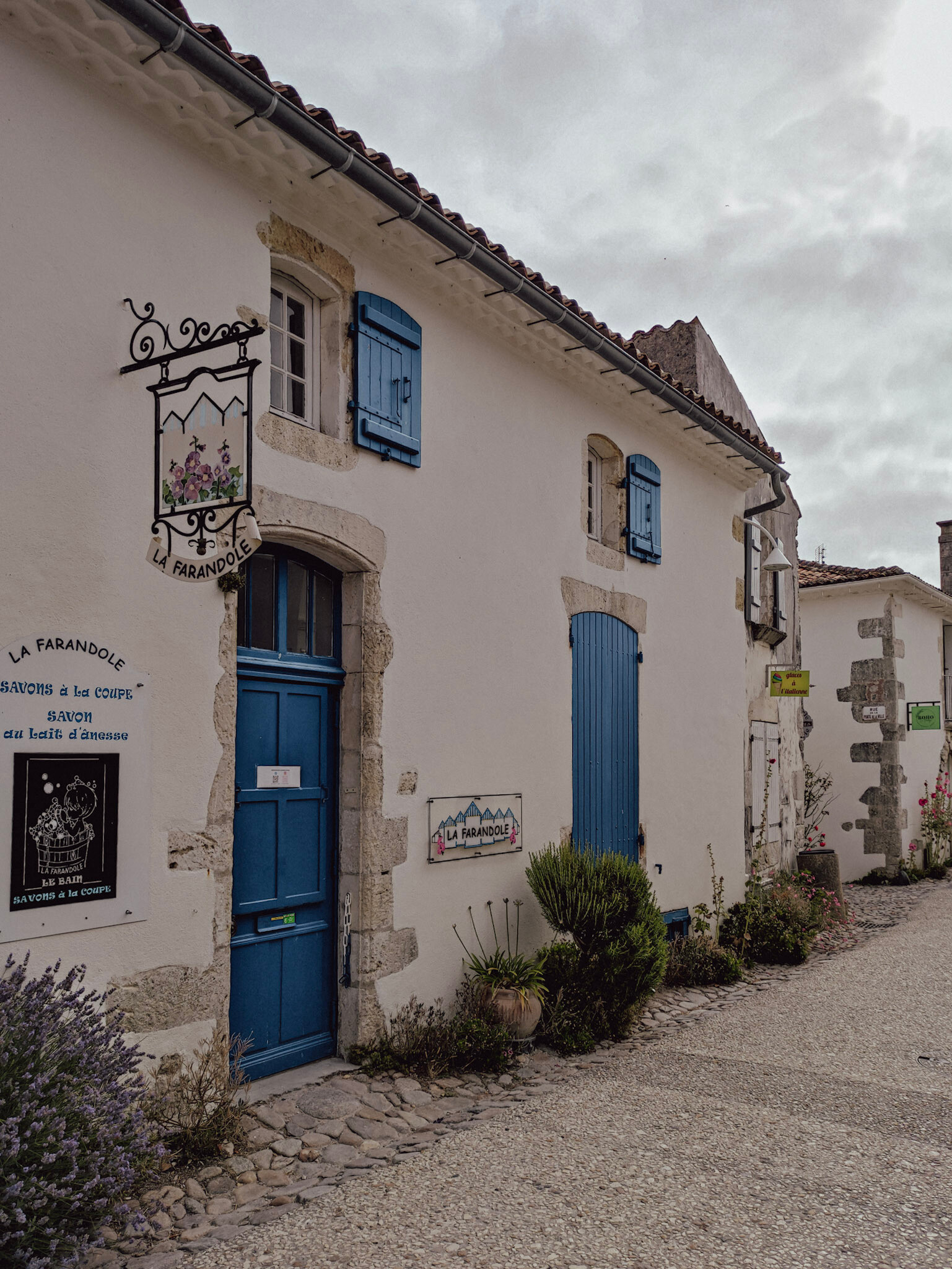
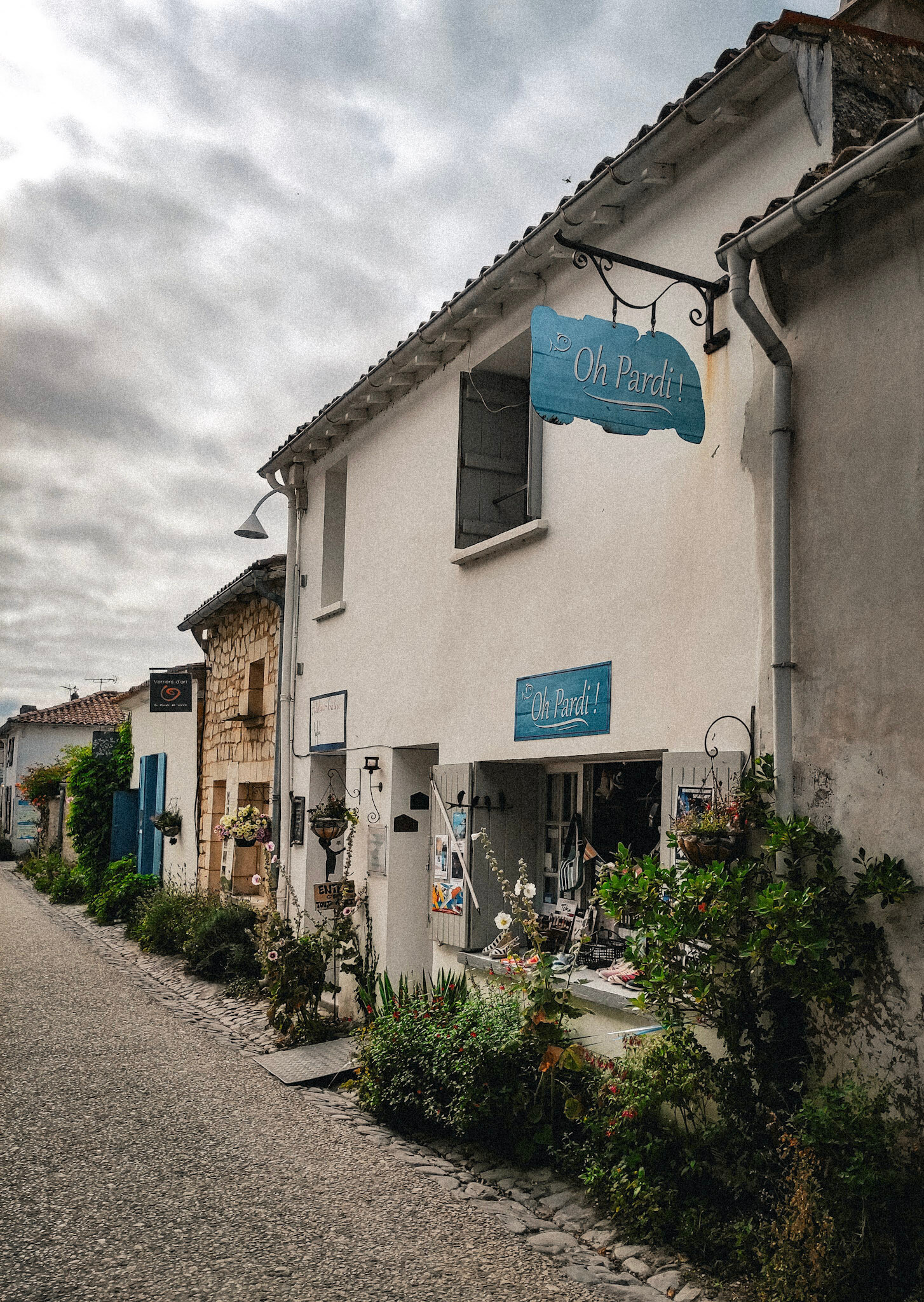
After walking around the cliffs, it is worth stopping by the small local shops hidden among the village streets. Alongside souvenirs featuring Sainte-Radegonde Church and the famous hollyhocks, you can find beautiful handmade gifts and decorative items.
Children will probably enjoy the wooden and felt souvenirs, seashells and simple traditional toys, which perfectly match the atmosphere of a place where flashy plastic gadgets are almost impossible to find.
The local shops in Talmont also sell regional specialities, including sea salt, salted butter caramel, honey and preserves.
Former residents of the village are buried here, along with sailors, fishermen and maritime pilots whose lives were closely connected with the unpredictable waters of the estuary. Pleasant walking paths run along the edge of the cliff, offering impressive views of the ocean tides. Depending on the time of day, the water either reveals rocky outcrops and sandbanks with an almost Scandinavian feel or surges dramatically towards the wall surrounding the church.
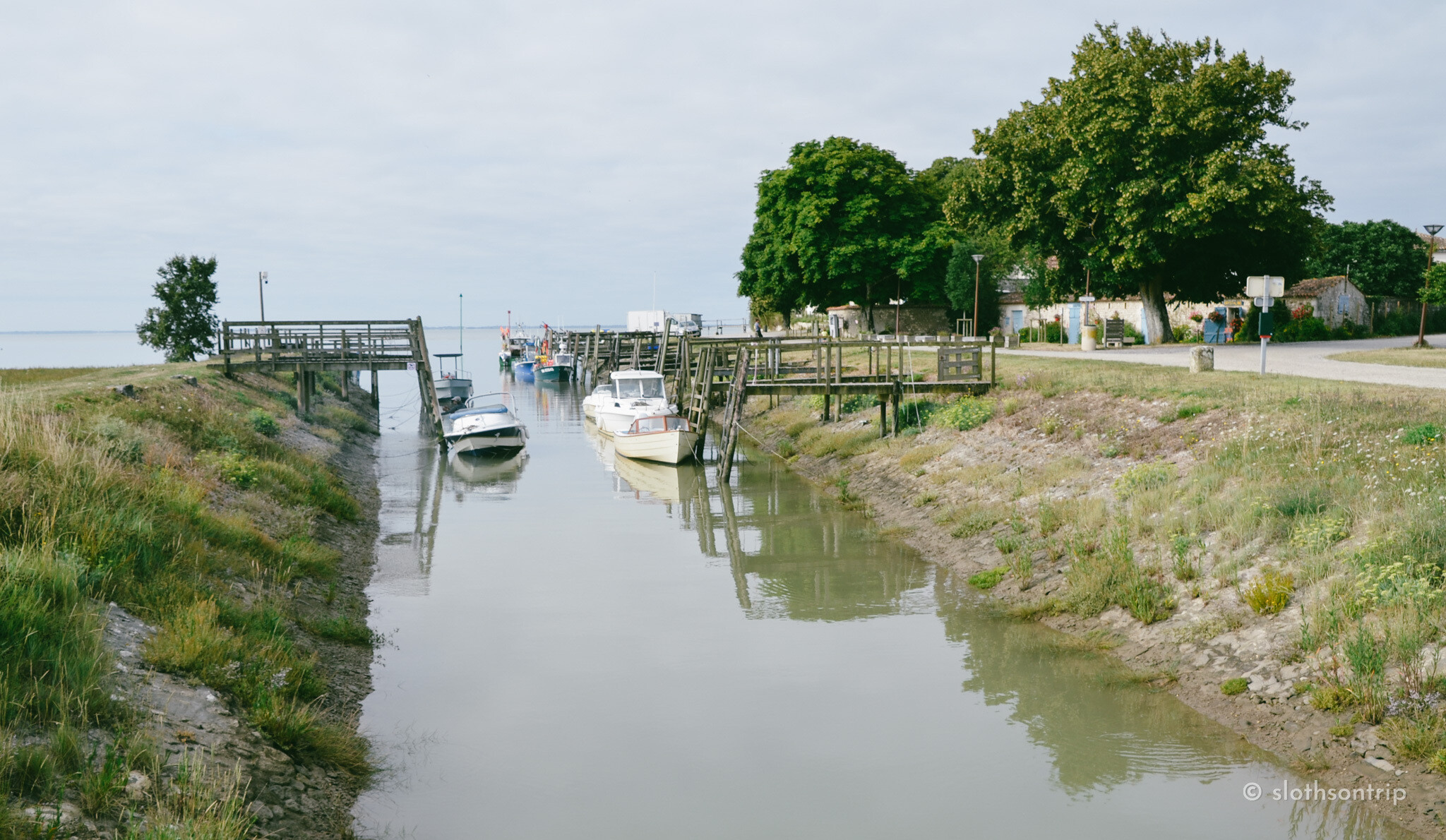
Near the small harbour, you will find intimate restaurants and cafés with terraces overlooking the water. Their menus are dominated by fresh seafood, the famous oysters from the Marennes-Oléron region, fish, Breton galettes and local cheeses. There is no need to plan an elaborate dinner, however. A crispy baguette, some cheese and a small picnic overlooking the estuary can be just as enjoyable.
During the summer season, it is worth sitting down for a meal a little earlier or booking a table in advance, especially when you would like to sit outside. The sight of the setting sun disappearing beyond the Gironde horizon certainly makes every meal taste even better.
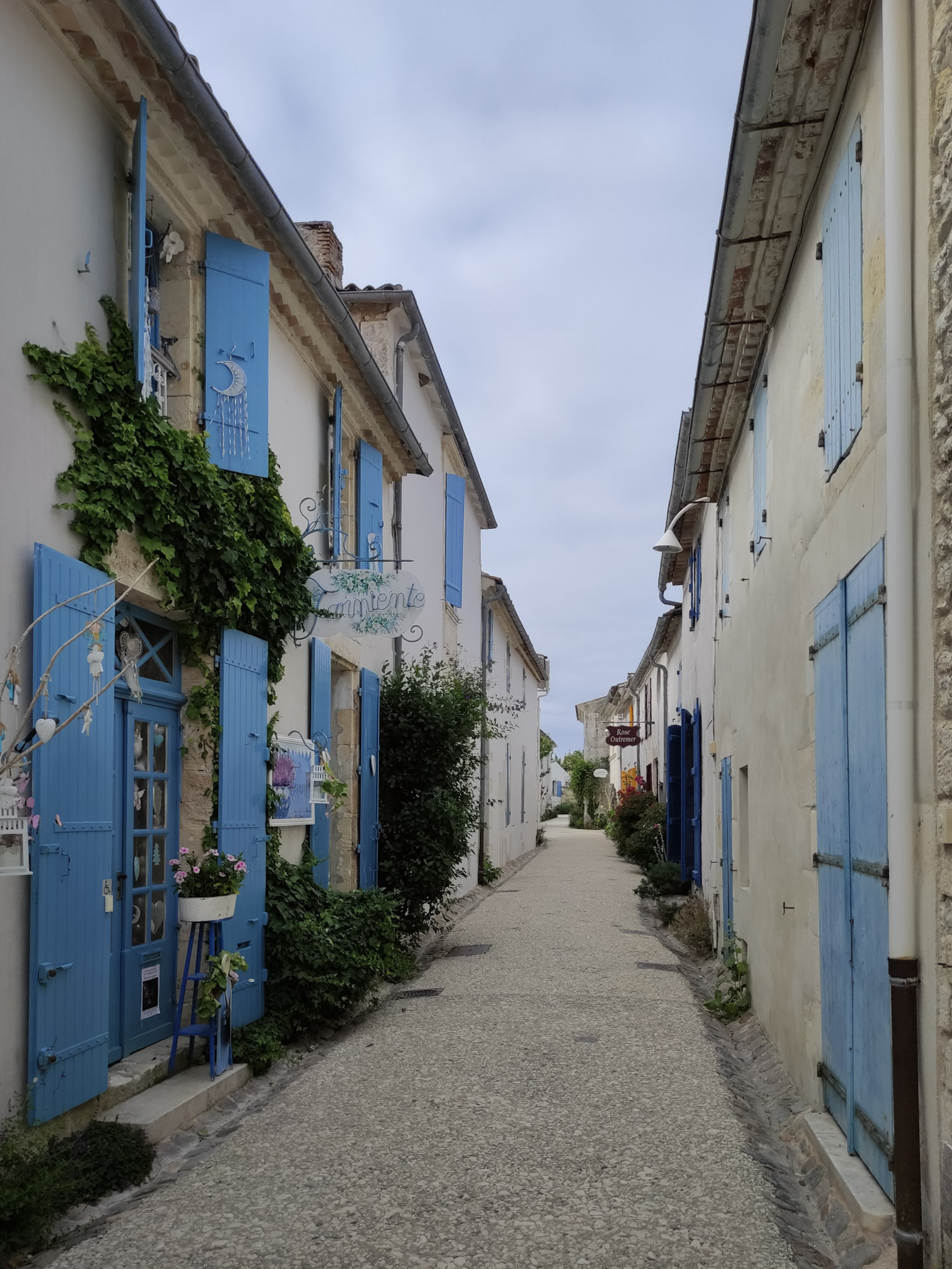
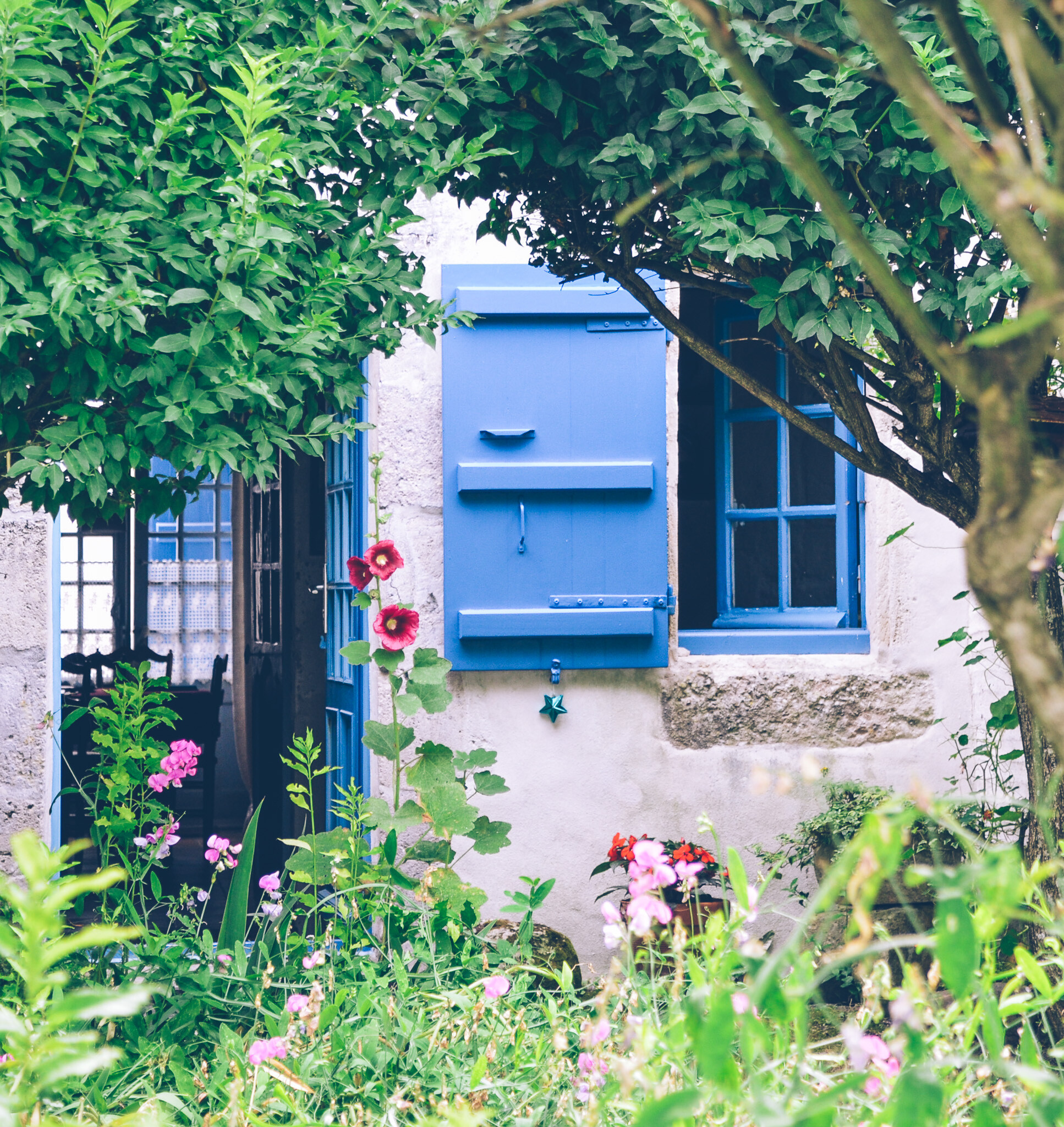
The best way to discover Talmont-sur-Gironde is simply to take a leisurely stroll through its narrow, traffic-free streets. Smooth cobblestones lie beneath your feet, while on either side stand the village’s characteristic low houses with whitewashed walls and pale blue or pastel-coloured shutters.
The village streets are famous for their hollyhocks, known in French as roses trémières. From spring until late summer, they grow almost everywhere: emerging from cracks in the cobblestones, climbing along the façades of houses and filling the lanes with colour. As you wander around without any particular plan, you keep coming across small artists’ studios, pottery workshops, tiny galleries and little shops selling handmade crafts.
The views change with every step.
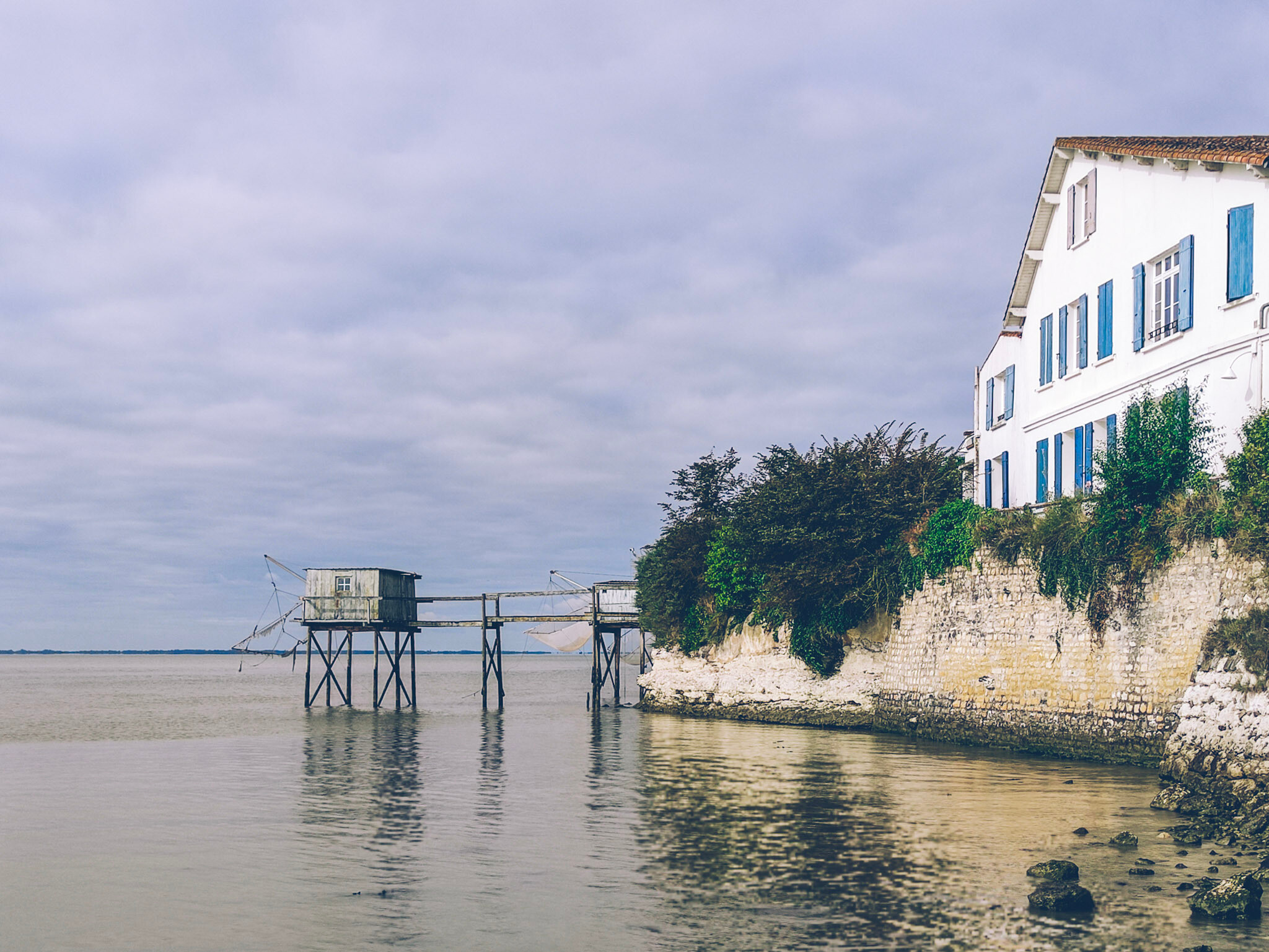
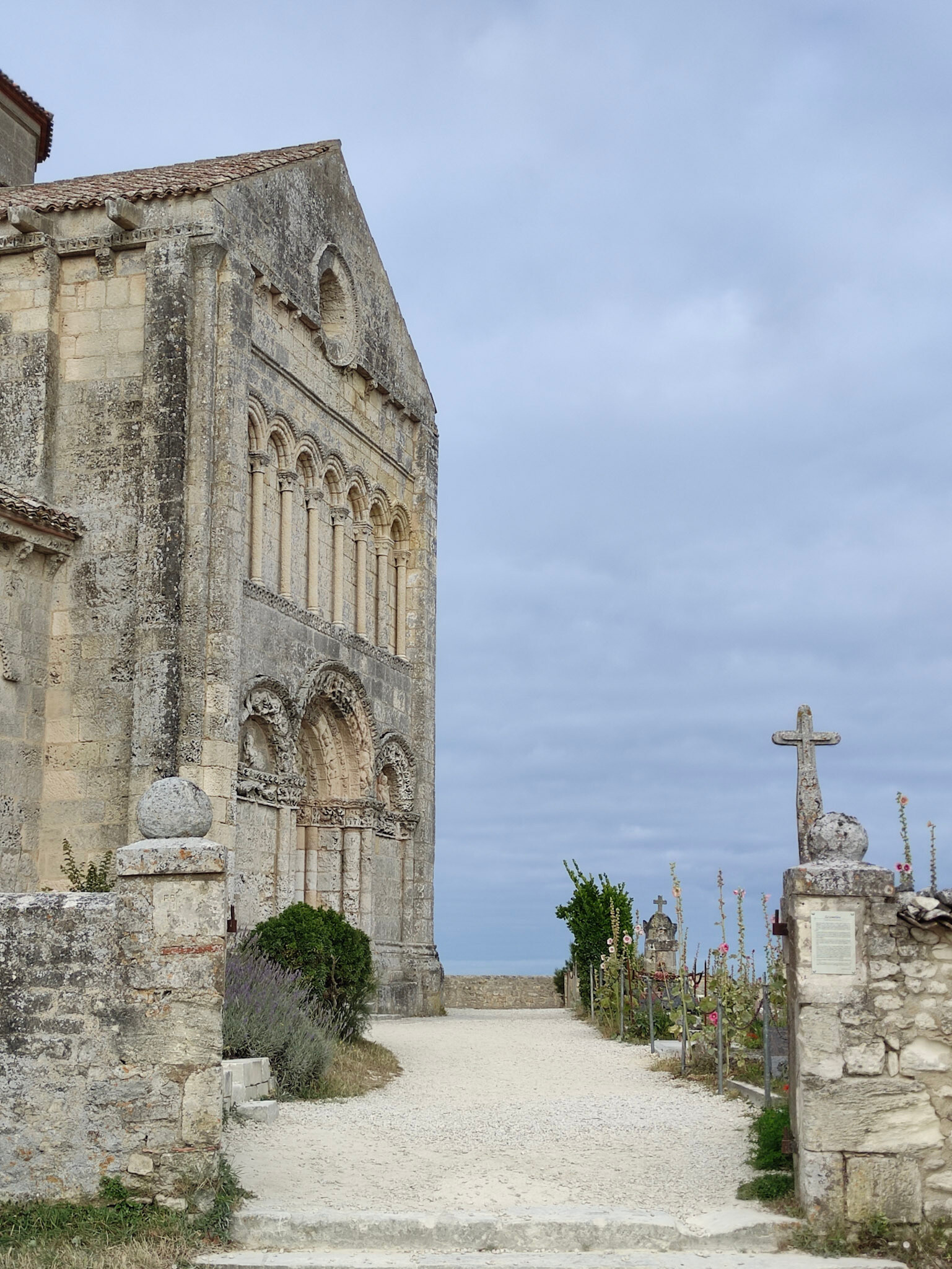
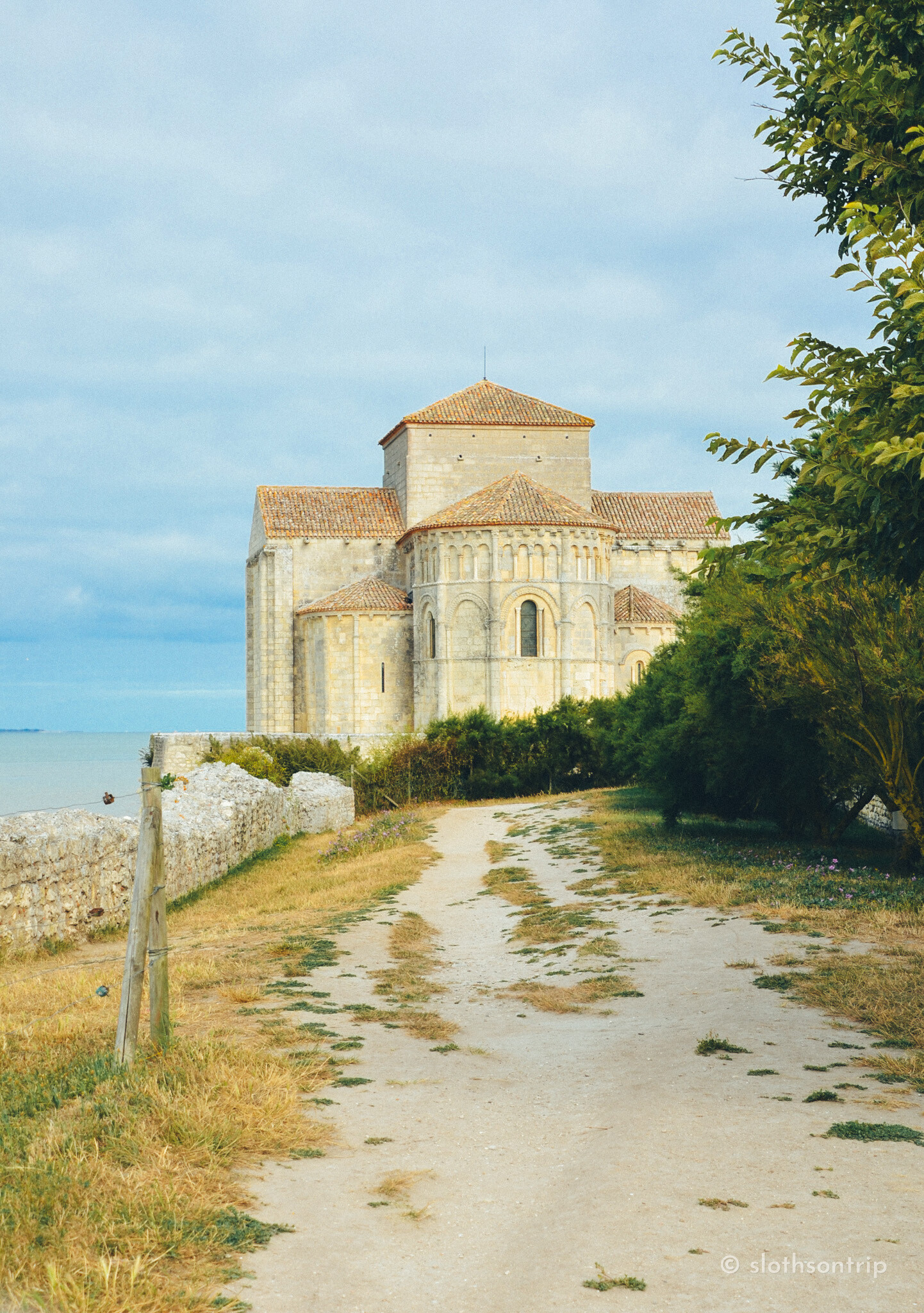
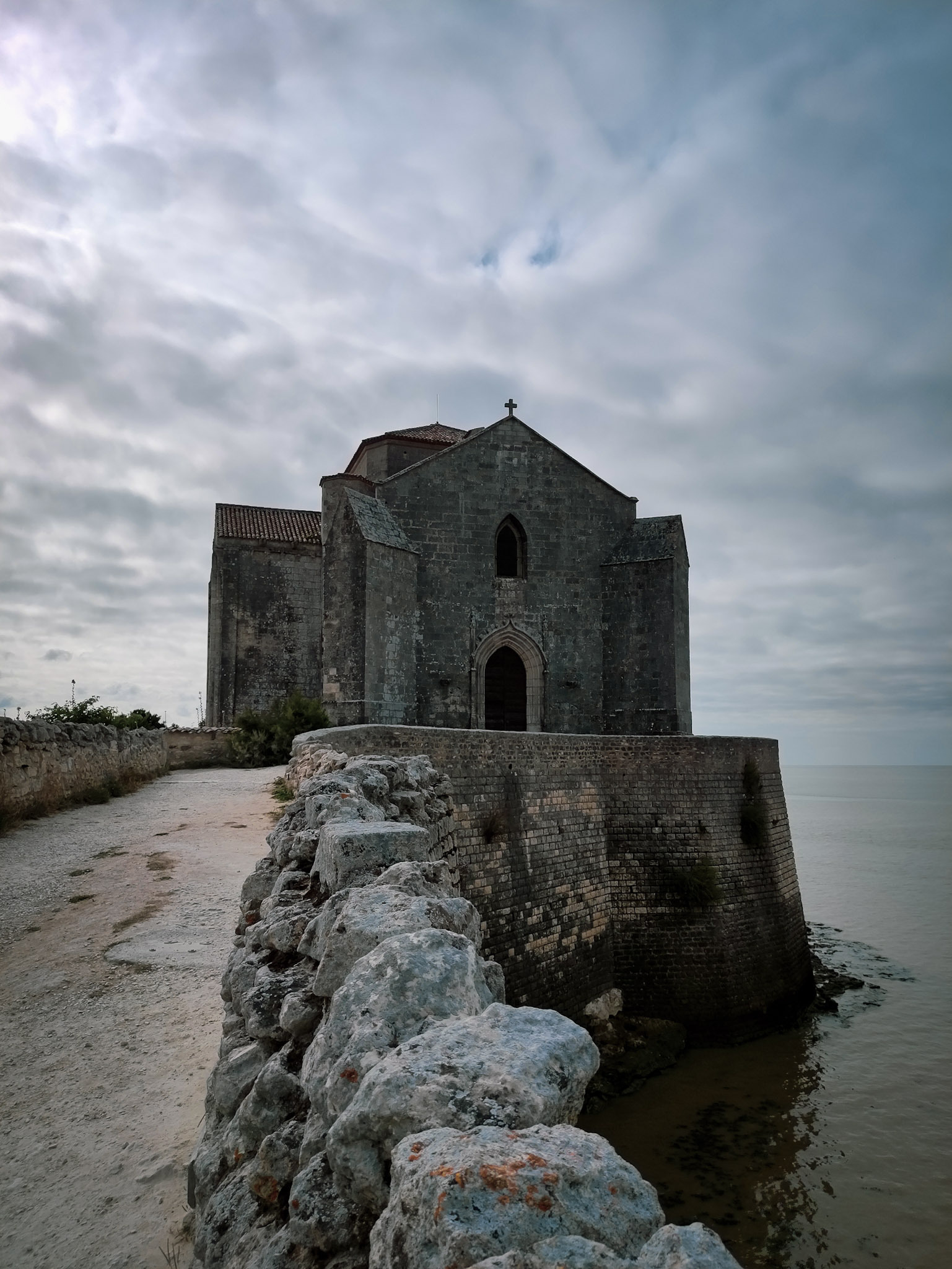
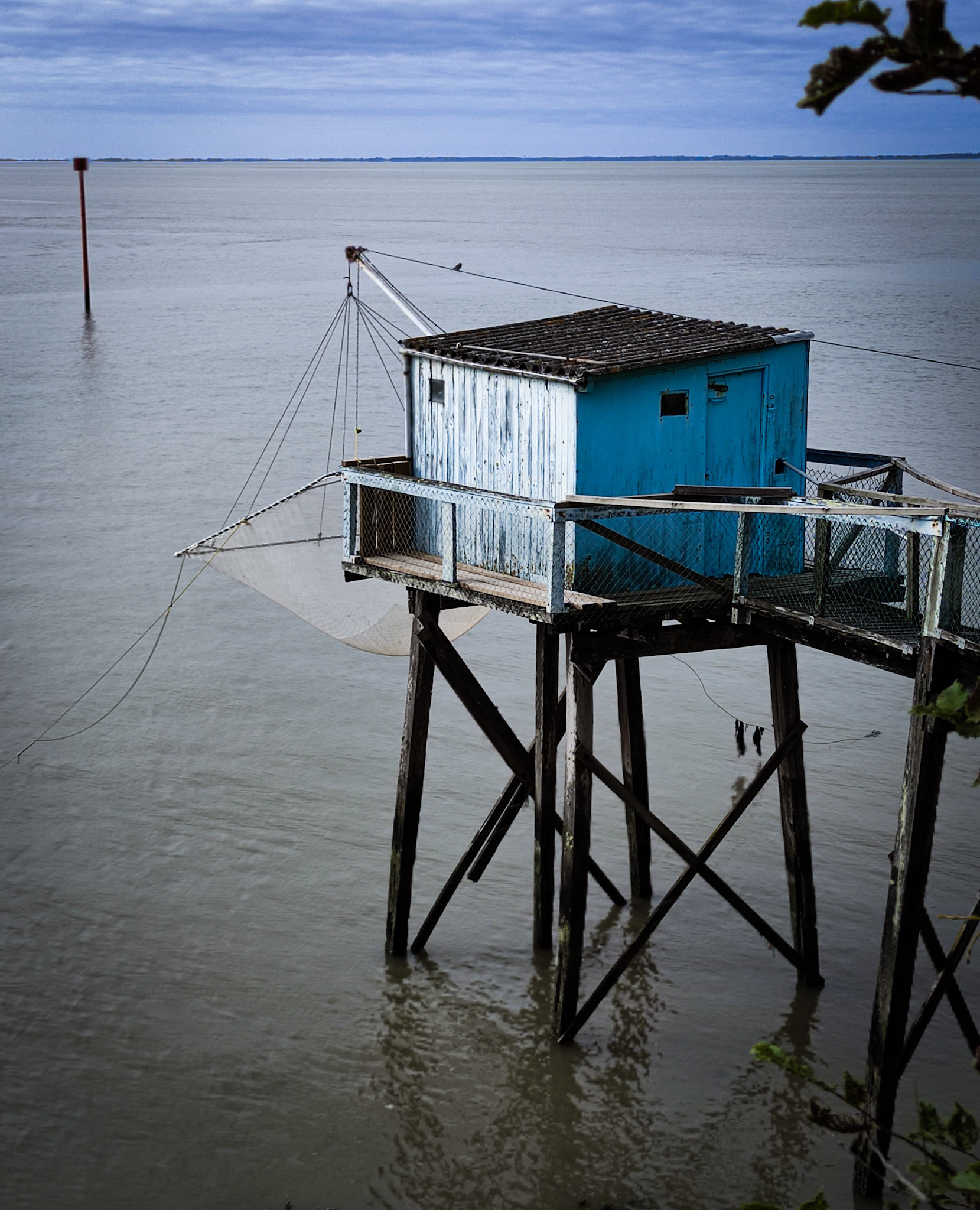
Between the white walls of the houses, you repeatedly catch glimpses of blue water or the silhouettes of traditional fishing platforms built on stilts, known as carrelets. These wooden walkways extend out over the water and are fitted with large square nets lowered on ropes. They are one of the most recognisable symbols of the Charente-Maritime coastline. The village’s most important landmark and its absolute symbol is the Romanesque Church of Sainte-Radegonde, or Église Sainte-Radegonde. Built in the 12th century by monks from the Abbey of Saint-Jean-d’Angély, it stands directly on the edge of a limestone cliff, just above the churning waters of the Gironde estuary. Its austere stone structure, built from pale limestone, has resisted sea winds and storms for almost a thousand years. The church once served not only as a place of worship but also as an important navigational landmark for sailors entering the dangerous estuary.
Talmont-sur-Gironde is located in the Charente-Maritime department, just a few kilometres south of the popular seaside resort of Royan. The village occupies a rocky headland projecting into the Gironde estuary, the largest in Europe, where the fresh waters of the Garonne and Dordogne rivers meet the salty waters of the Atlantic Ocean.
The village has an exceptionally rich history. It was founded in 1284 by King Edward I of England as a fortified bastide. At the time, the region of Nouvelle-Aquitaine was under English rule, and Talmont’s position on a high rocky promontory made it an excellent strategic point from which to control ships travelling upstream towards Bordeaux.
The layout of the village still reveals its bastide origins. Its streets intersect at right angles, forming a regular grid lined with small, single-storey fishermen’s cottages. The former moat and parts of the massive defensive walls have disappeared, but the atmosphere of a fortified settlement suspended above the water can still be clearly felt. For centuries, the inhabitants made their living mainly from fishing, particularly sturgeon fishing and caviar production, as well as maritime piloting and agriculture. Today, thanks to careful heritage protection and the ban on vehicle traffic within the village, Talmont has preserved its intimate, nostalgic atmosphere, attracting visitors in search of peace and quiet.
Practical Information
Location and getting there:
Talmont-sur-Gironde is located in the Charente-Maritime department, approximately 15 km south of Royan. It is easy to reach by car via the D145, known as the Route Verte, which is a very scenic road in its own right.
Parking:
Cars are not allowed inside the village, except for vehicles belonging to local residents. A large paid tourist car park, Parking de Talmont, is located at the entrance to the village. From there, it is only a 5–7-minute walk to the historic centre and Sainte-Radegonde Church.
How much time should you allow?
Around two hours should be enough for a leisurely walk through the village, a stroll along the cliffside path and a visit to Sainte-Radegonde Church. When you are planning lunch in one of the harbour restaurants, visiting local workshops and spending more time relaxing while enjoying the ocean views, it is worth setting aside three to four hours or even half a day.
Tickets and admission:
Entry to the village and Sainte-Radegonde Church is free of charge. The only fee is for the municipal car park at the entrance, which costs approximately €3–€4 per day, depending on the season.
Visiting with children:
Most of the village streets are flat and accessible with a pushchair, although the old cobblestones and gravel surfaces may require a little patience in some places. The cliffside areas are secured, but it is still advisable to hold younger children by the hand near the edge because of the high rocks.
When should you visit?
The best time to visit is between May and September, when the village’s famous hollyhocks are in bloom. Summer afternoons can become quite busy with day-trippers, so it is best to arrive in the morning, before 11:00 a.m., or later in the afternoon, when the light is at its most beautiful and the streets begin to empty.
Sainte-Radegonde – the church and the cliff:
The church is open to visitors every day during daylight hours. Pay particular attention to the intricate Romanesque carvings around the entrance portal. Beside the church, there is a tiny maritime cemetery overlooking the Gironde estuary.
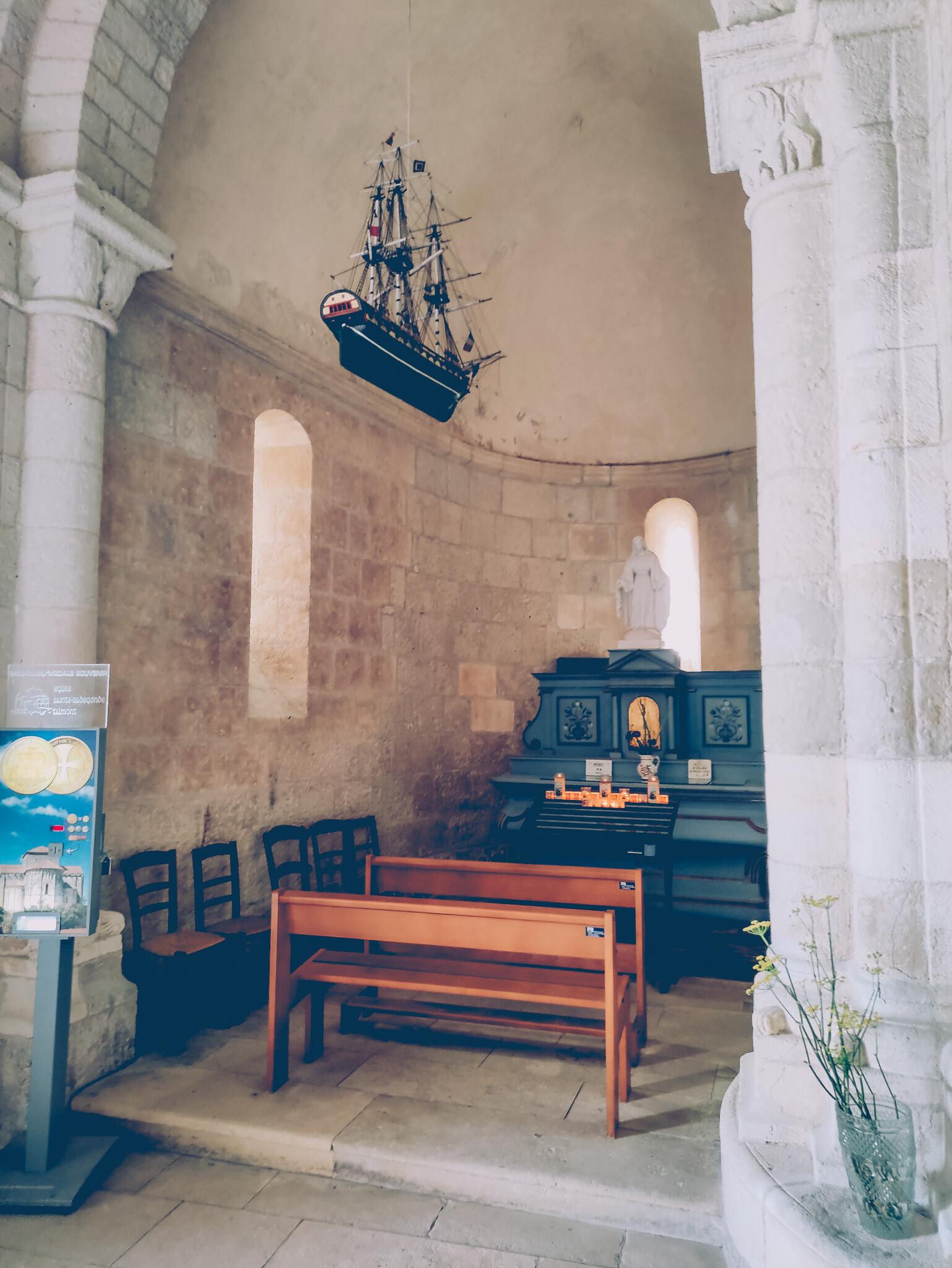
The church is a fine example of Aquitaine Romanesque architecture, with a beautifully and intricately carved portal and a massive tower rising above the crossing. Particularly striking are the Romanesque modillions, decorative carvings beneath the cornice depicting distorted faces, symbols of sin, plant motifs and mythical creatures intended to ward off evil forces. As you step inside, the austerity and simplicity of the interior immediately stand out. Above the altar hangs a traditional model ship, a votive offering from local fishermen and sailors giving thanks for a safe return from the sea. Immediately beside the church, on the very edge of the cliff, lies a tiny and exceptionally atmospheric maritime cemetery, known as the cimetière marin. It is one of the few places of its kind in France where gravestones stand only a few steps from the coastal precipice, surrounded by wild hollyhocks and creeping seaside plants.
Imagine a place where narrow cobbled streets lead straight towards the open sea, whitewashed houses with colourful shutters are surrounded by wild hollyhocks, and time seems to move noticeably more slowly. It is quiet, peaceful and incredibly photogenic. There are no high-rise buildings, noisy resorts or attractions demanding your attention at every turn. Instead, there is the wind, the scent of salt in the air and architecture that has survived for centuries in an almost unchanged form.
Talmont-sur-Gironde: a village by the ocean where time stood still
This is Talmont-sur-Gironde, one of the most beautiful and charming villages in France, officially listed as one of Les Plus Beaux Villages de France. And although France is filled with delightful corners, Talmont, perched above the Gironde estuary, truly has a way of stealing your heart at first sight.
Follow us on social media:
The website created using the WebWave.