
Is it worth visiting Marais Poitevin?
Marais Poitevin does not impress with a single grand monument. There is no landmark where one takes a photo and returns to the car after ten minutes. Instead, it is the entire landscape, the murmur of water, green tunnels, flat boats, and small towns where life still unfolds close to the canals.
That is exactly why we liked it here so much. After the noisy cities, crowded beaches, and obligatory attractions, Maillezais and Coulon turned out to be the perfect place to slow down. A boat trip, a short walk, a visit to a museum, and felt animal masks that made Tosi's day—sometimes you really need nothing more.
Marais Poitevin is a great stop on the way to La Rochelle, Île de Ré, or further towards Bordeaux. It is one of those French gems that is still not widely talked about in Poland. And perhaps thanks to that, the Green Venice remains truly green, quiet, and somewhat hidden.
Several restaurants and creperies operate by the waterfront, with terraces facing the river. The menu features pancakes, fish, eels, goat cheeses, and local dishes made with mogette beans. However, there's no need to plan a large lunch; a baguette, cheese, and a small picnic by the water will work just as well.
During the season, it's worth eating earlier or reserving a table, especially if you want a spot right by the water's edge. The sight of passing boats definitely enhances the flavor of even the simplest French pancake.
"After the tour, be sure to check out the museum shop. Besides books, postcards, plush toys, and local products, you can find really nice felt animal masks there. They can also be purchased at the shop by the Maillezais dock. Tosi particularly liked them. A simple item, without electronics or flashing lights, yet it provided more fun than many 'modern' attractions. The masks are soft, colorful, and definitely stand out against the usual plastic souvenirs. It's one of those little things that a child remembers better than all the dates and museum descriptions combined. She took an owl, a mouse, and a fox."
"In the shops, you can also buy local preserves, caramel, mogette beans, angelica products, and the characteristic regional alcoholic beverages:""Pineau des Charentes""is a traditional French aperitif made from a blend of lightly fermented grape juice and strong cognac.""Trouspinette""is a regional alcohol from Vendée, created by macerating young blackthorn shoots (or other fruits) in wine mixed with spirit and sugar. The more adventurous can even find pâtés made from nutria, an animal that has settled in the local canals and is not particularly favored by residents as an invasive species."
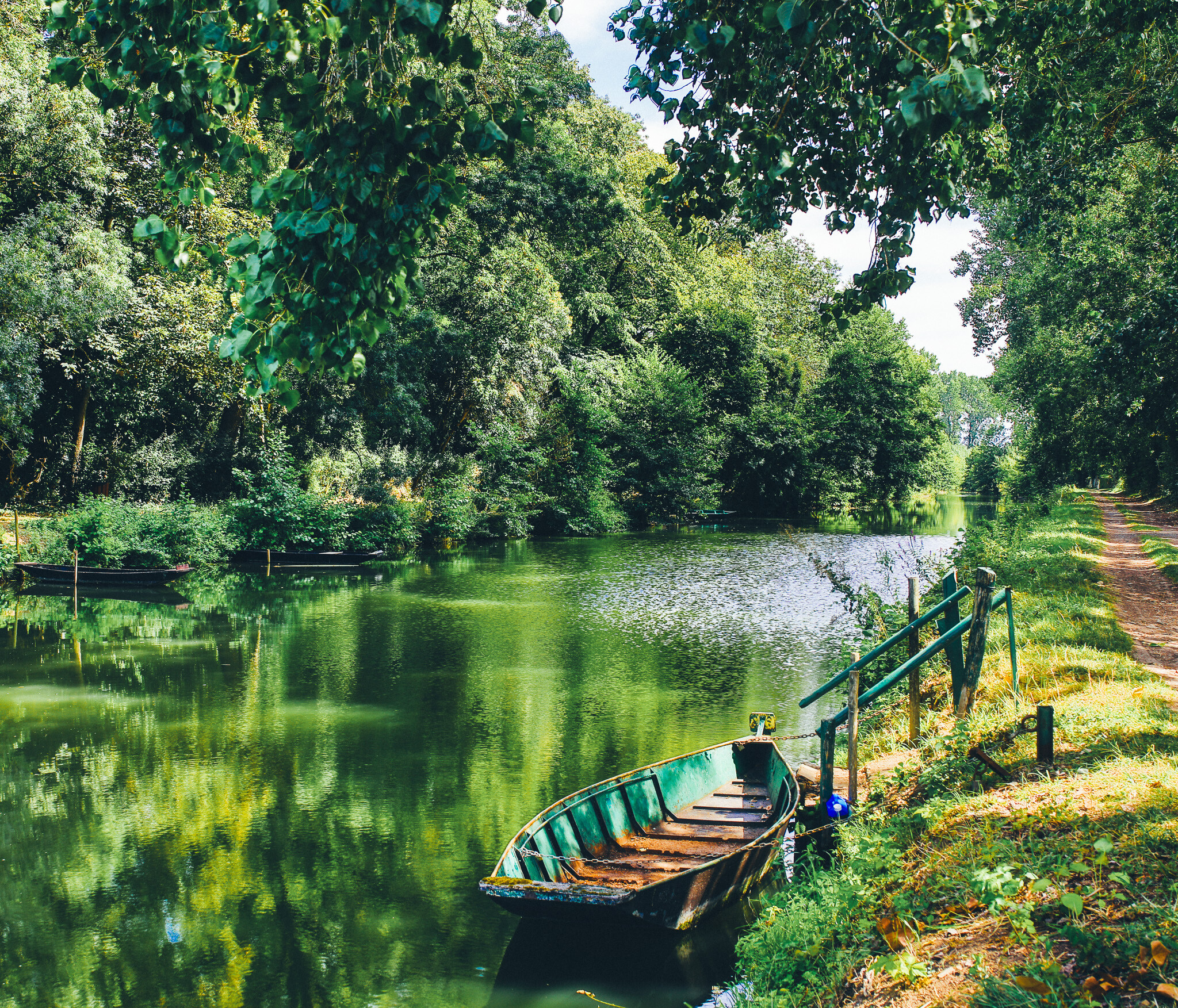
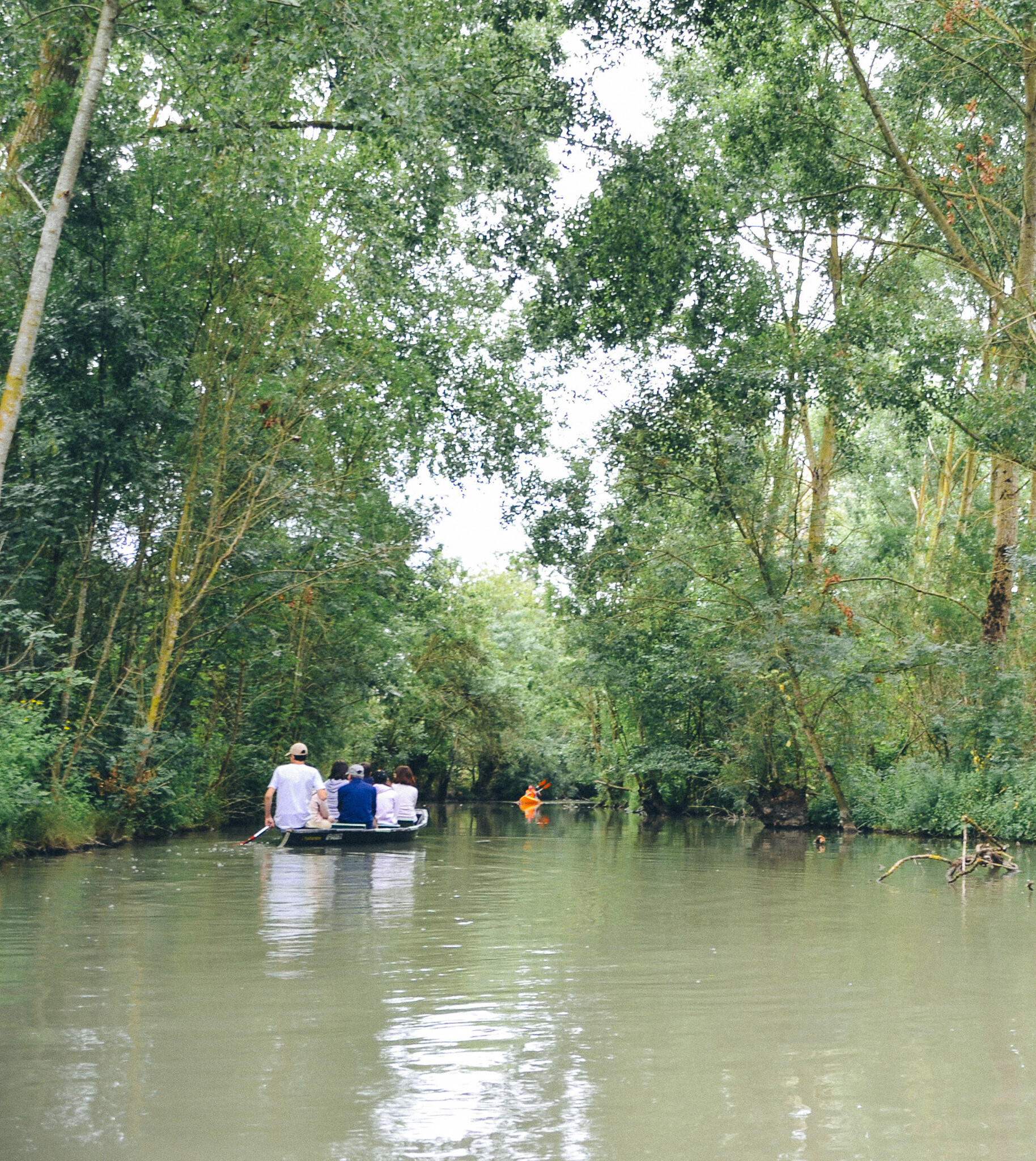
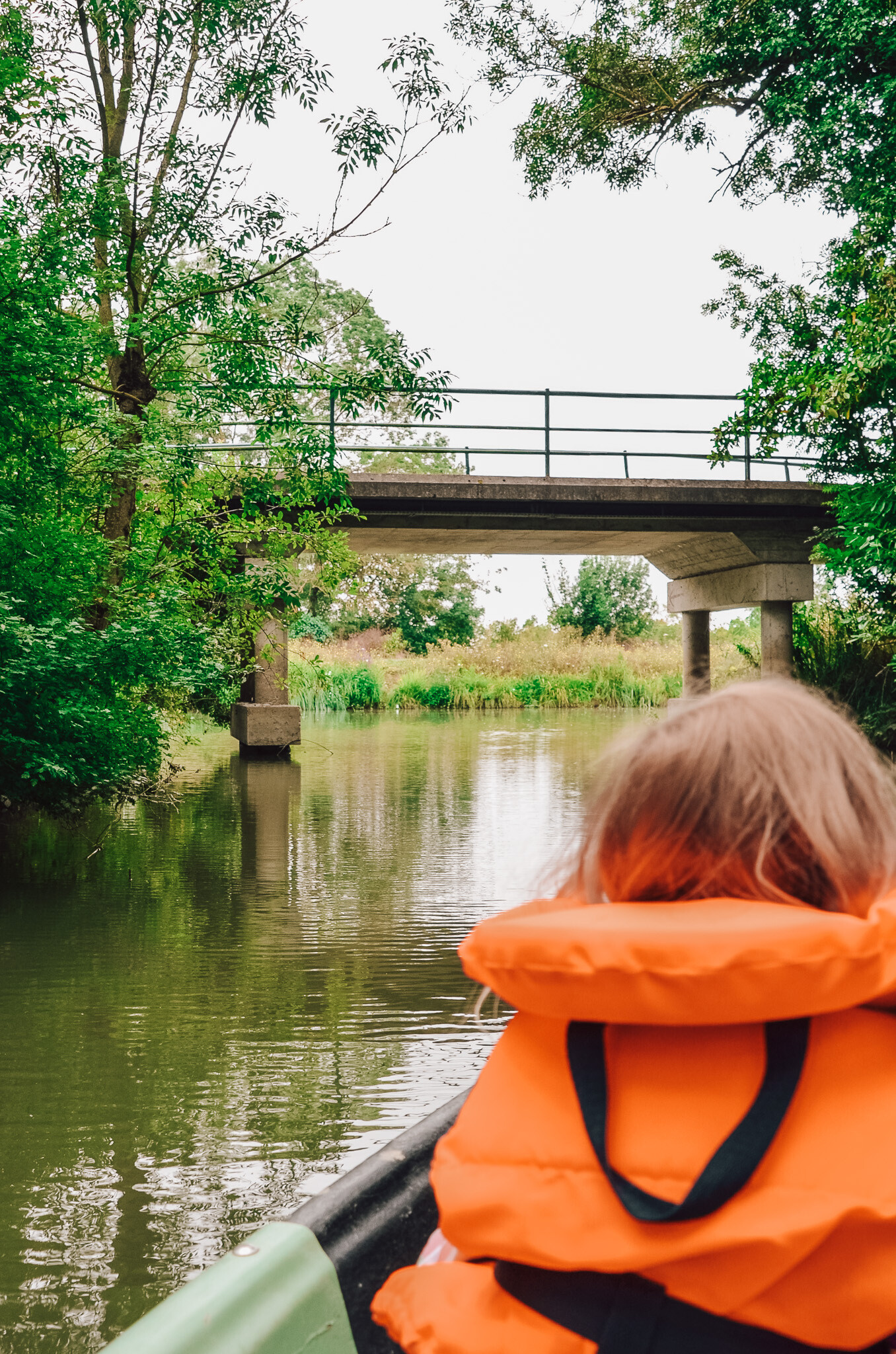
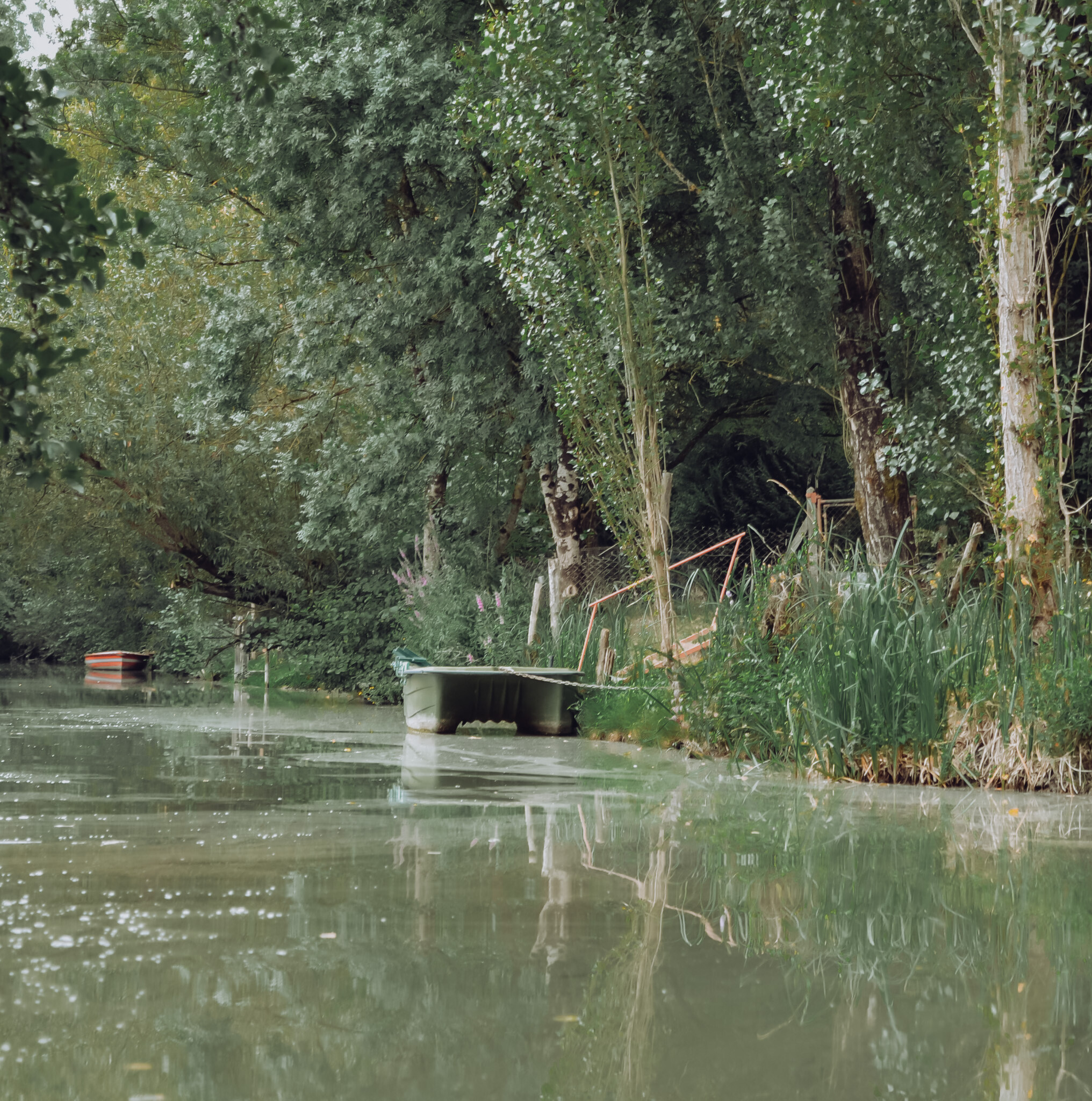
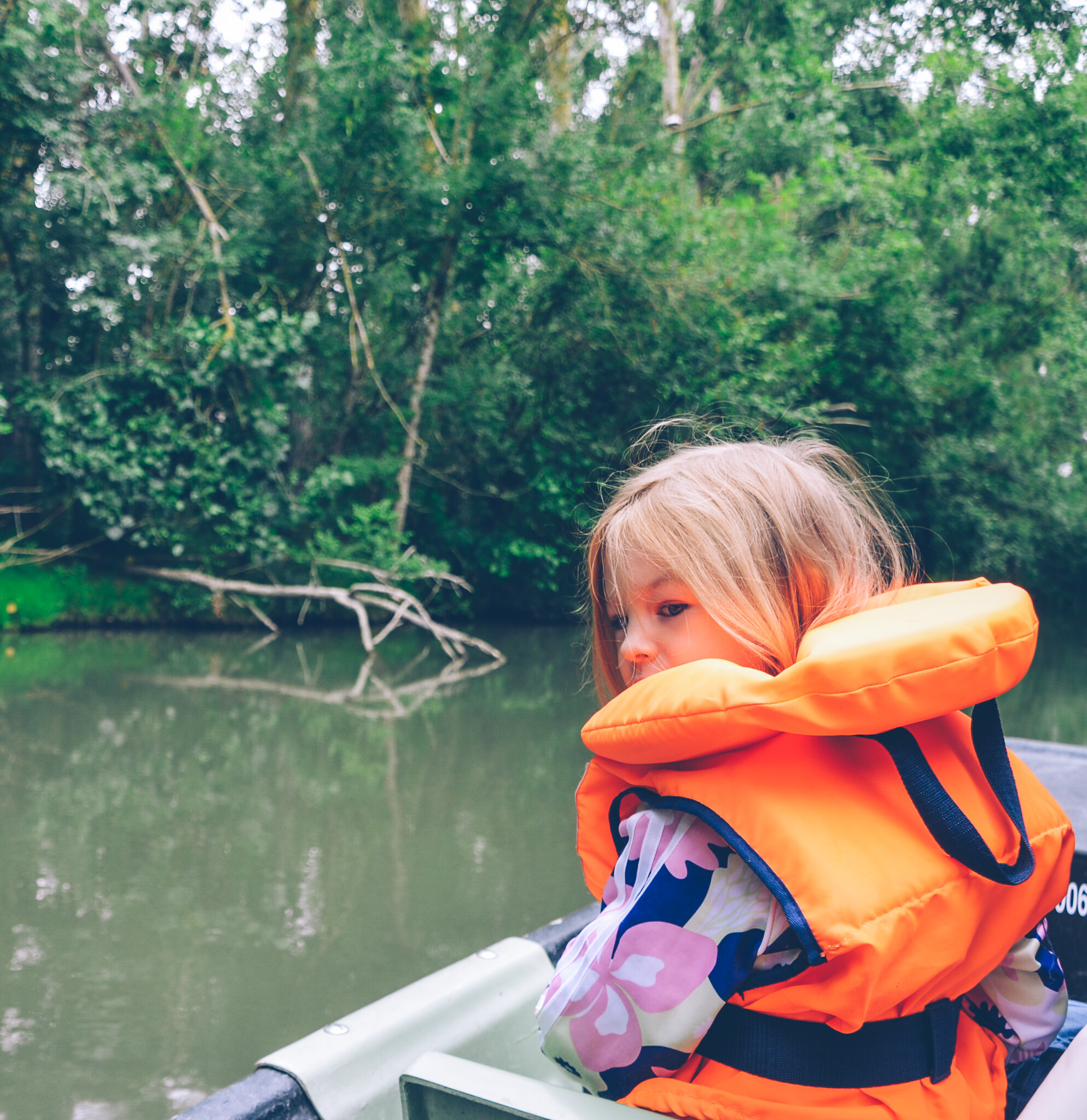
The best way to explore Marais Poitevin remains, of course, a boat trip. Traditional boats are flat, narrow, and very stable. In the past, they were used by locals to transport people, animals, wood, and agricultural products. Today, they mainly carry tourists, but it only takes drifting a little away from the shore for the chatter to quickly fade behind you. We started from the Abbey Pier dock on Rue du Grand Port in Maillezais.
This is a smaller, much more intimate harbor than those in popular Coulon. Right next to it lie the majestic ruins of the Gothic-Romanesque Abbey of Maillezais, which gives the whole place an extraordinary atmosphere from the very first moments on the water. It is an amazing site showcasing the history of the ancient monks who were the first to shape the local canals and transform the wild marshes into a unique ecosystem.
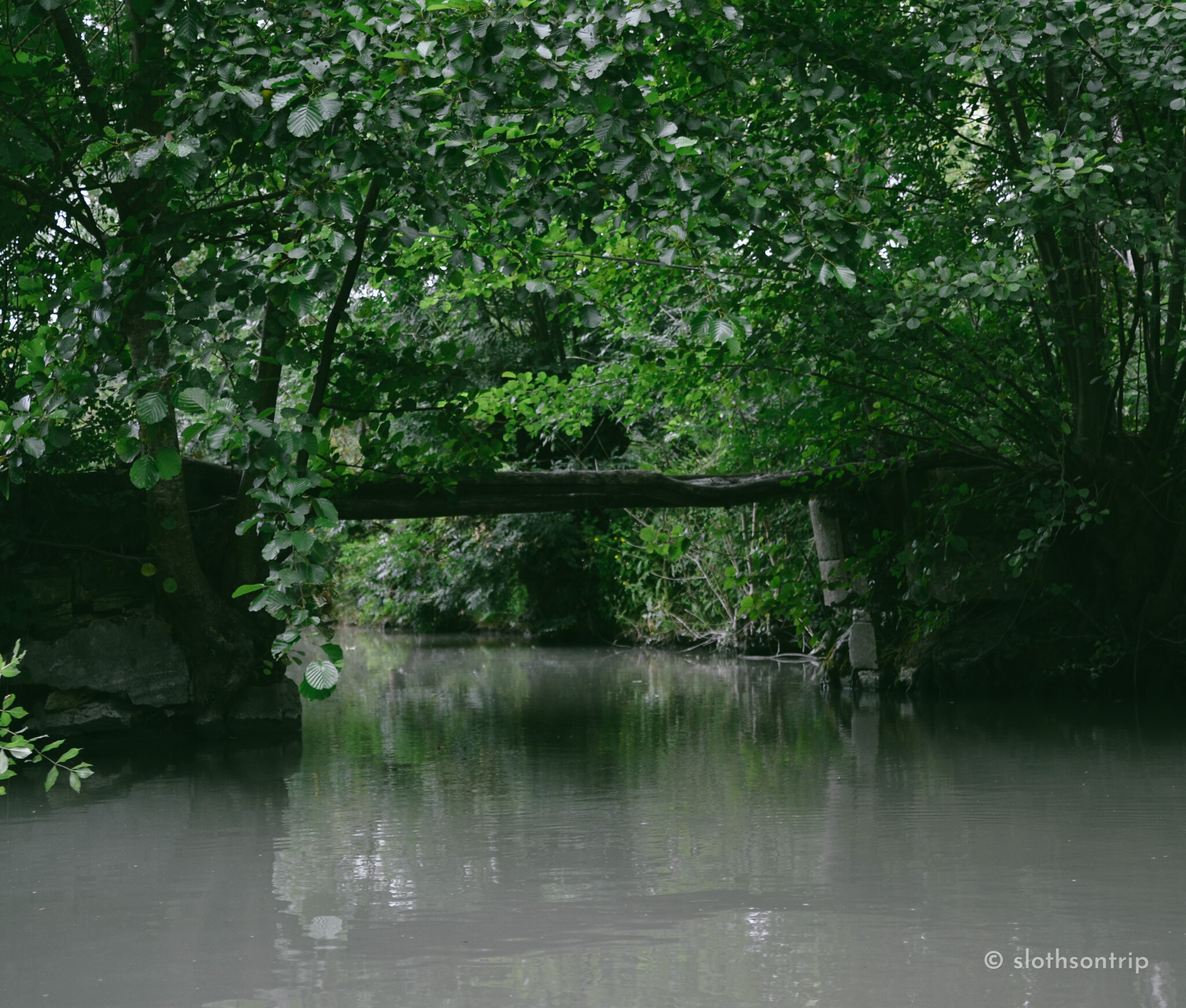
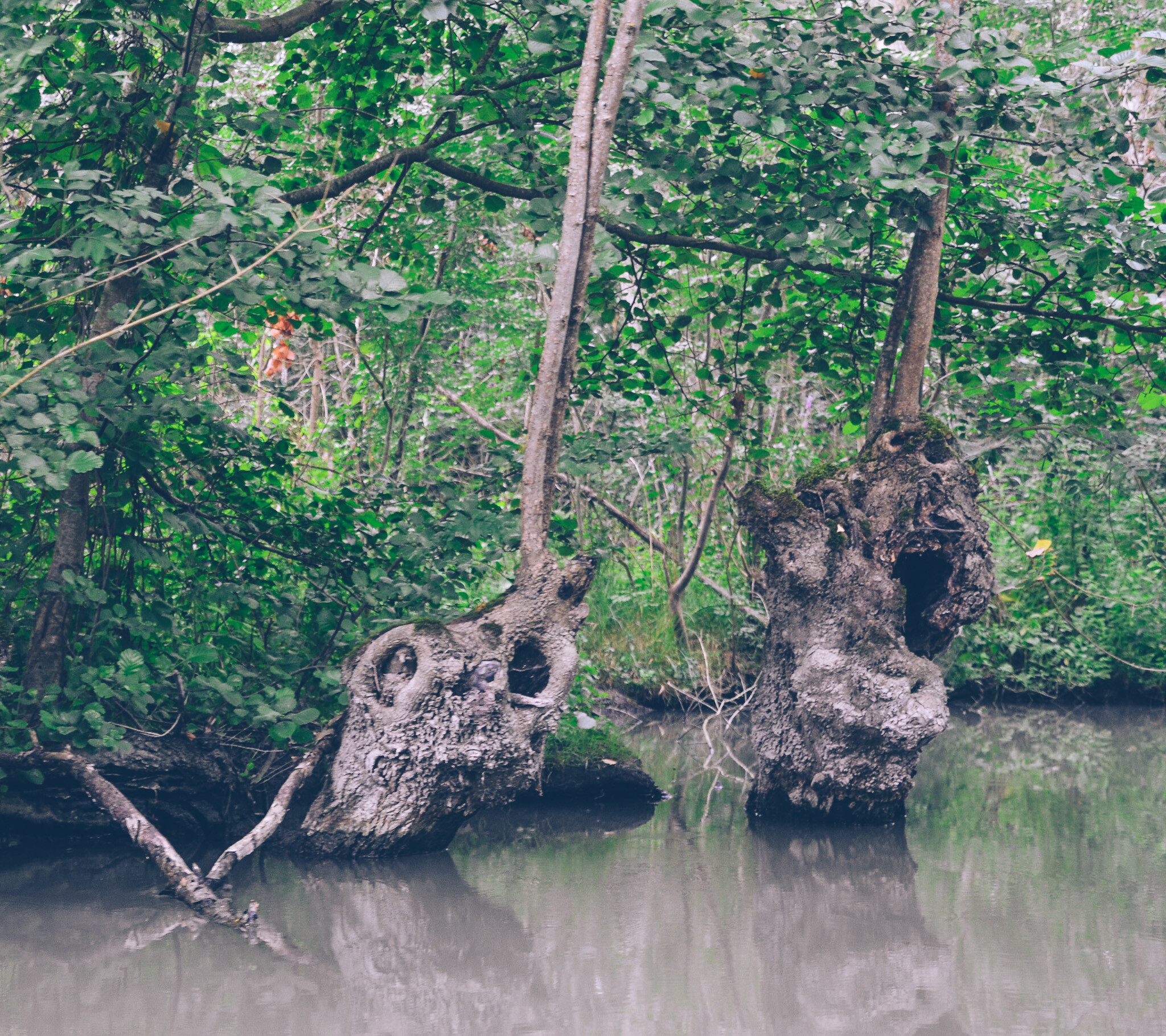
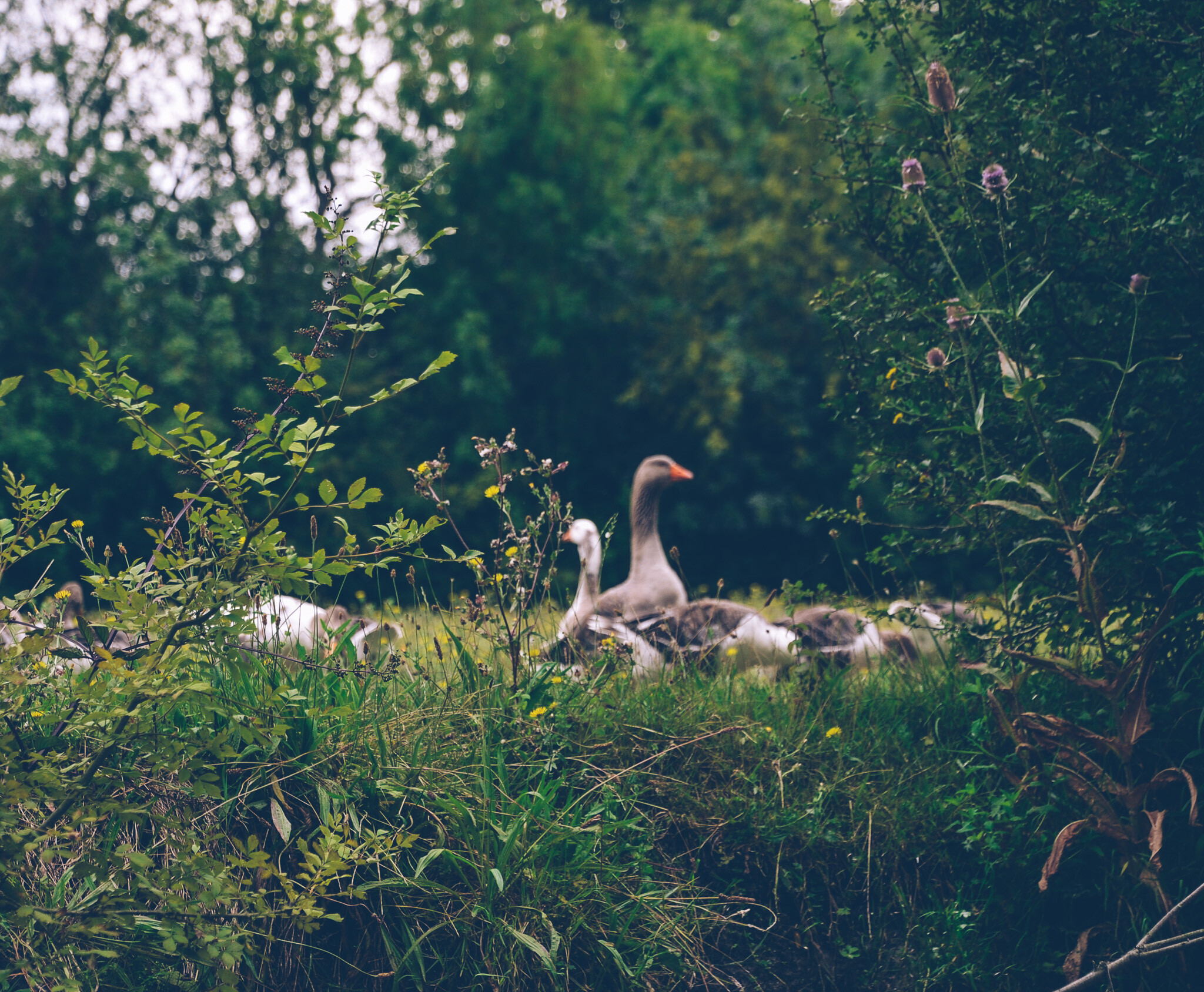
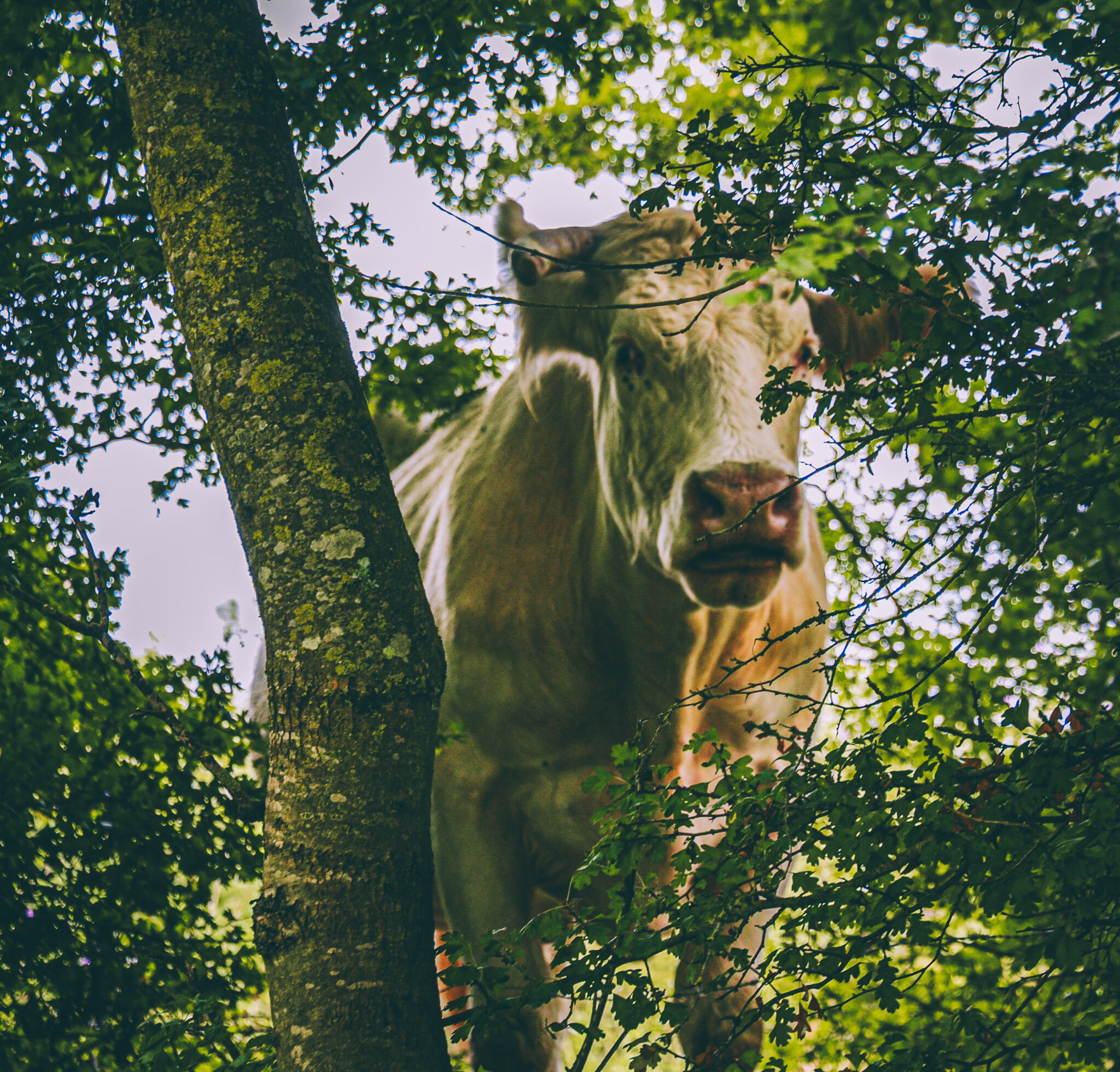
The canals gradually become narrower. Trees grow almost directly from the banks, their roots holding the moist soil, and their branches meet high above the water. Sunlight filters through the leaves only in spots, creating bright patches on the surface of the canal. Sometimes a second boat passes us, sometimes a heron stands motionless on the shore, and you can encounter cows, geese, and sometimes absolutely nothing happens at all. And it is this "nothing" that is the best part here. During a guided tour, you can learn how residents have controlled the water level for centuries, why the trees along the canals are regularly pruned, and what daily life was like in the settlements that were easiest to reach by boat. You can also paddle on your own. This is a good option for those who want to stop for photos and go at their own pace. Just remember that steering a long, heavy boat doesn’t always look as graceful as it does in the hands of local guides. The first turns may resemble more of a water driving course than a romantic cruise through the French Venice.
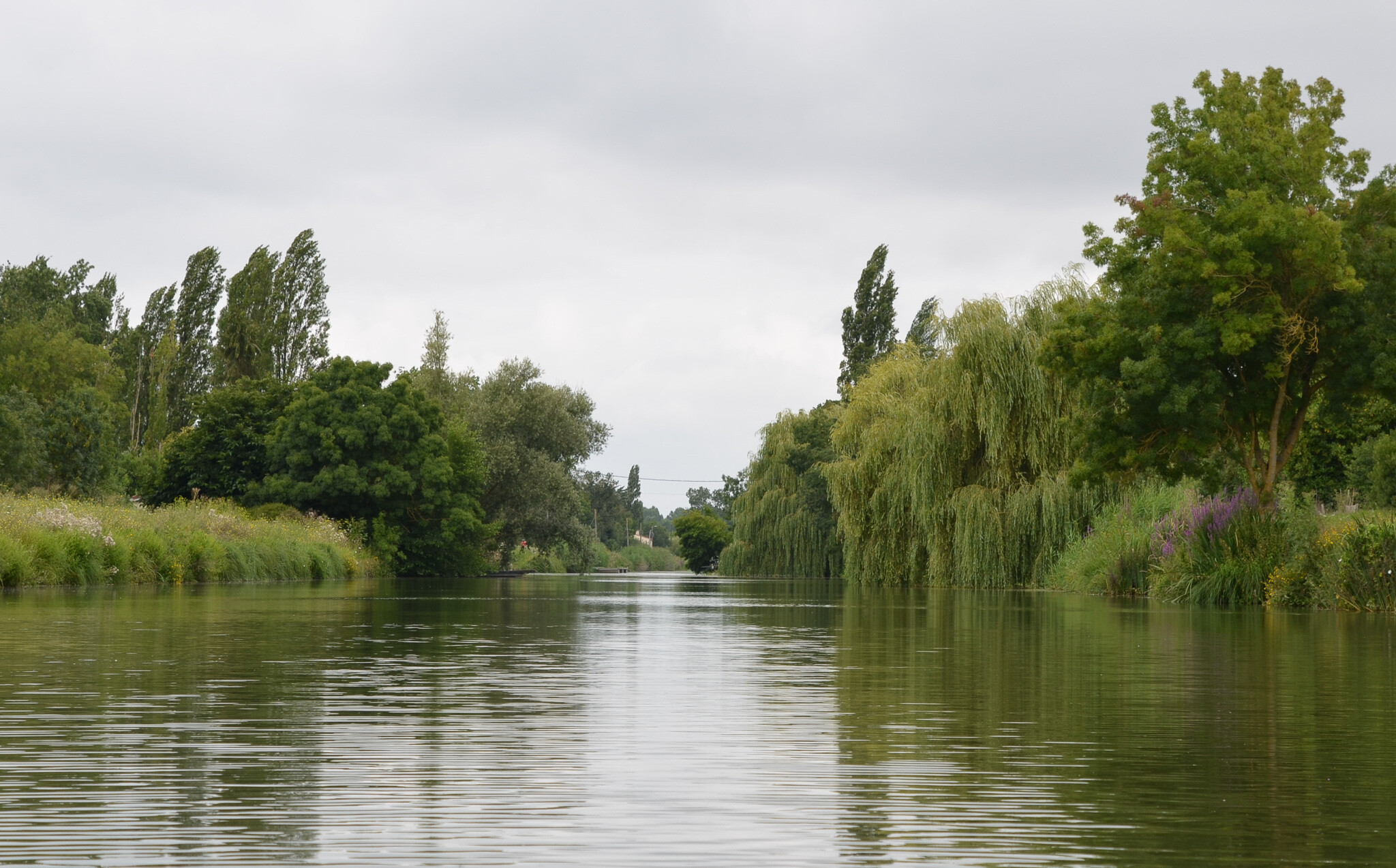
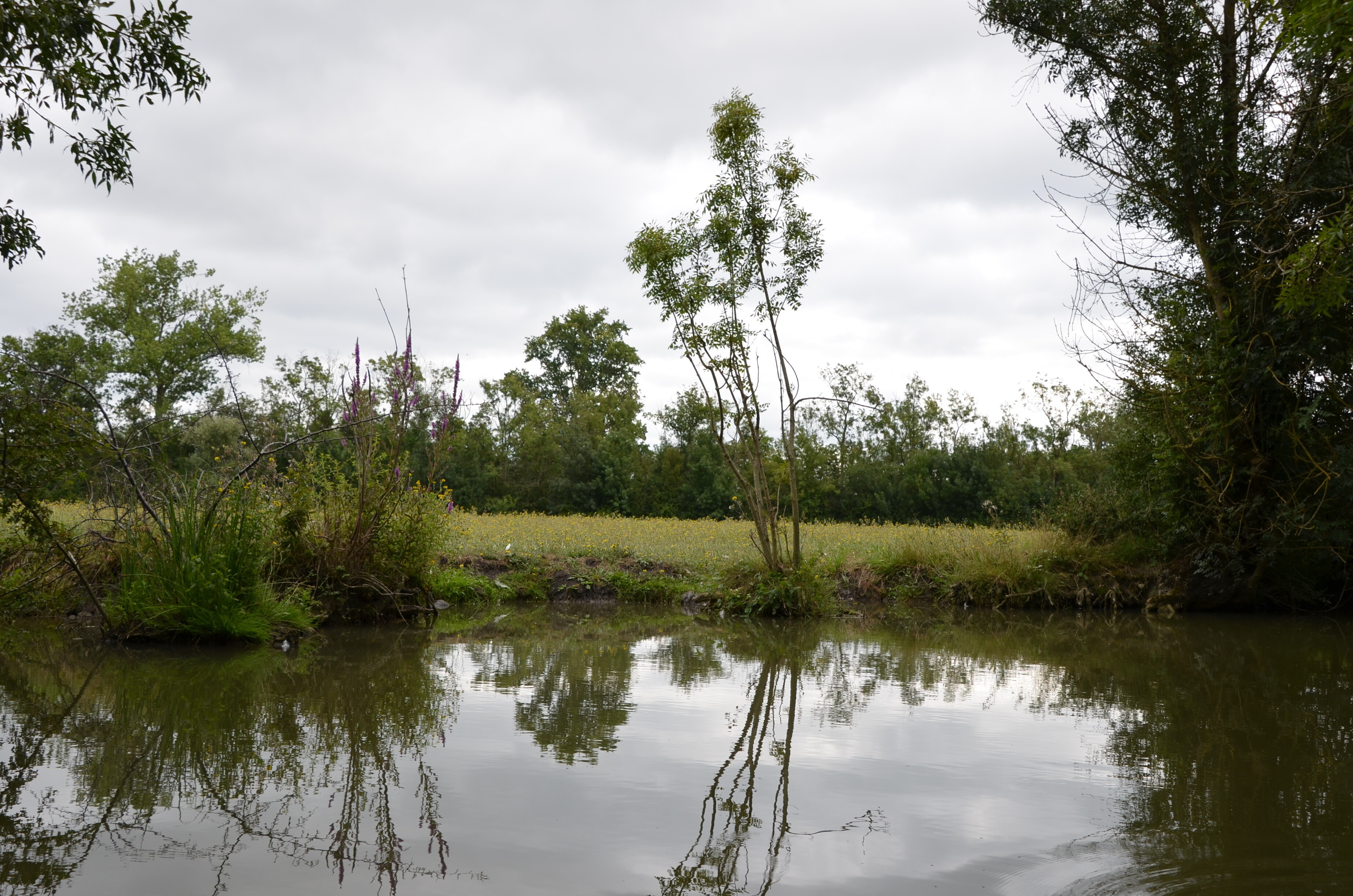
The Marais Poitevin occupies a vast area between Niort and the Atlantic, extending across three departments: Vendée, Deux-Sèvres, and Charente-Maritime. The park is formed not only by tree-lined canals known from photographs but also by open fields, drained wetlands, meadows, flood embankments, and the coastal bay of Aiguillon.
Long ago, there was a sea bay here called the Bay of the Pictons. Over the centuries, it was gradually silted up, drained, and transformed by humans. As early as the Middle Ages, monks from nearby abbeys dug canals and built levees, trying to reclaim fertile land for cultivation.
In this way, two different regions emerged. The first is drained marshes, which are wetlands that have been drained and protected by embankments. The second is wet marshes, flooded areas crisscrossed by a dense network of small canals. It is the greenest part of these marshes that received the name Green Venice.
The scale of the entire system is impressive. In the Marais Poitevin, there are about 8,200 kilometers of waterways and canals, 1,000 kilometers of levees, and hundreds of structures regulating water levels. The area is a Regional Natural Park, designated as a Grand Site de France, and since 2023, it also holds the status of a Ramsar wetland of international importance.
Practical Information
Parking: The most convenient place to leave your car is in the parking lot located right by the harbor and the road leading to the abbey at Rue du Grand Port in Maillezais.You will easily find convenient parking spots, just a few steps away from the boats and ticket offices. In Coulon Parking de l’Autremont at Rue André Cramois.There are over 200 spots available, and it takes about a 300-meter pleasant walk along the river to reach the center of Coulon and the Maison du Marais Poitevin.
How much time to allocate? For a walk around the Abbey Pier, the area of the Maillezais abbey, and a brief tour of the surroundings, about 2 hours should suffice. If you plan to visit the abbey ruins and take a boat trip through the canals, it's best to reserve at least half a day. By combining boating, cycling, and a leisurely lunch, you can stay here from morning until late afternoon.
Boat trip:
At the Abbey Pier in Maillezais, there is a rental service and a boatman dock. You can choose a guided tour where the guide steers with a long pole called a pigouille, or rent a boat on your own. In the latter case, you will receive a map of the canals, but it’s worth keeping a close eye on the signs; all the green bends start to look suspiciously similar after a while. More info HERE and HERE.
Maillezais:
-
Boat trip with a boatman: routes from 2 to 5.5 km (duration from 1 to 3 hours, with the option to return on foot) – prices start from €13.50 / adult..
-
Boat rentals without a boatman: duration from 1h 15 min to 4 hours (picnicking allowed) – prices start from €21 for 2–3 people..
Coulon:
-
Private trip with a boatman costs about €23 for 1 hour, €29 for 1.5 hours, or €35 for 2 hours per adult. Children aged 5–12 pay €13, €17, or €21 respectively, and the trip requires a minimum of two people.
-
Renting the whole boat without a boatman costs about €30 for 1 hour, €40 for 1.5 hours, €50 for 2 hours, or €80 for 5 hours – maximum for 7 people.
-
There is also a shared trip with a boatman : 1.5 hours costs about €19 per adult and €13 per child, with a minimum of four participants.
When to come? On holiday weekends, it gets busier, so it’s best to arrive in the morning. May, June, and September are great choices, as it’s green and warm, but quieter than during peak season. In summer, sunscreen, a hat, and insect repellent are essential on the water.
If you choose Coulon, there isthe Maison du Marais Poitevin, a small museum showcasing the history and daily life of the marshland inhabitants. It is located in the former Maison de la Coutume building. In the past, fees were collected here from carriers transporting goods by river, and the money collected was used for the maintenance of locks and waterways. Inside, you can see a recreated interior of a house from the late 19th century, traditional furnishings, tools, and exhibitions explaining how people learned to live in areas regularly flooded with water. A separate section is dedicated to eels, which have been one of the symbols of local cuisine and economy for years.
Imagine a place where roads sometimes give way to canals, boats replace cars, and old ashes and willows lean over the water, creating green tunnels. It is quiet, peaceful, and slightly mysterious. There are no grand monuments, queues, or attractions shouting from every billboard. Instead, there is nature, which from the very first moments forces you to slow down.
Marais Poitevin: A Hidden Gem of Western France Off the Beaten Path
This isMarais Poitevin, one of the largest wetland areas on the French Atlantic coast. Its most picturesque part is calledVenise Verte - the Green Venice. And although comparisons to Venice can sometimes be quite stretched, here it is truly hard to think of a better name.
Follow us on social media:
The website created using the WebWave.